
 中文
 Tiếng Việt


Where is the best place to raise a family, find the right school, or prepare for college? The answer depends on your family’s priorities.
On July 28, 2026, U.S. News & World Report released its annual Best States rankings, comparing all of its 50 states across education, health care, the economy, infrastructure, opportunity, fiscal stability, crime and corrections, and the natural environment.
Utah ranked first overall for the fourth consecutive year, while South Dakota and Minnesota took second and third. Meanwhile, Colorado ranked first in education, and Texas led the economy category. These results highlight an important distinction: the best overall state is not necessarily the best state for a student’s education, a family’s budget, or a particular career path.
For families living in the United States, relocating, or considering schools in another state, these rankings offer a useful starting point. But most importantly, how do a state’s strengths and weaknesses align with your family’s priorities?
2026 U.S. News Best States: Top 10
The 2026 overall rankings place several Midwestern and Mountain West states near the top, alongside established destinations such as New Hampshire, Florida, and Washington.
| Rank: | State: |
| 1 | Utah |
| 2 | South Dakota |
| 3 | Minnesota |
| 4 | North Dakota |
| 5 | Nebraska |
| 6 | New Hampshire |
| 7 | Idaho |
| 8 | Florida |
| 9 | Washington |
| 10 | Vermont |
One of the biggest changes compared to last year came from the Dakotas. South Dakota rose from No. 8 in 2025 to No. 2 in 2026, while North Dakota climbed from No. 12 to No. 4. New Hampshire moved in the opposite direction, falling from No. 2 to No. 6.
These shifts are reminders that state rankings reflect a particular year’s data and methodology. A change in a state’s ranking does not necessarily mean that it suddenly became a better or worse place for every family.
What Does the Best States Ranking Actually Measure?
The U.S. News evaluates all 50 states using 71 metrics across eight categories:
- Healthcare
- Education
- Economy
- Infrastructure
- Opportunity
- Fiscal Stability
- Crime and Corrections
- Natural Environment
Because the overall ranking combines these different measures, it reflects a state’s performance across multiple areas rather than school quality alone.
That breadth makes the ranking useful in understanding a state’s overall performance, but it also creates important limitations for families: A state can have excellent universities and strong school systems while struggling with housing affordability or infrastructure. Another state may offer a favorable economic environment and stable public finances without having the particular school or academic program a student needs.
The overall ranking combines these dimensions into one result. It should not be interpreted as a direct ranking of school quality, college admissions opportunities, or suitability for children.
For families comparing locations, it is more useful to research the individual categories first and then investigate the specific school districts, schools, and communities under consideration.
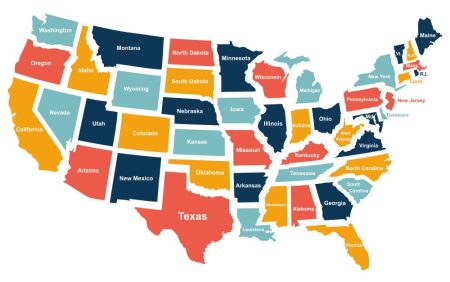
Which States Stand Out for Education in 2026?
For families with school-age children, the education category may be more relevant than the overall ranking. In 2026, the top three states were: Colorado, New Jersey, and Florida.
Colorado’s rise from No. 3 to No. 1 in education was associated with improvements in associate degree completion and attainment, along with increased preschool enrollment supported by the state’s universal preschool program.
The contrast between Colorado and Utah is especially instructive. Utah ranked first overall, but Colorado led in education. Florida also performed strongly in education while placing eighth overall.
What this means for families: A state’s education ranking is a useful screening tool, not a substitute for comparing individual schools. Families should still investigate a school’s academic offerings, student support systems, extracurricular opportunities, class sizes, and community.
The type of school matters, too. Public school families may need to look closely at district boundaries and enrollment policies. Families considering independent or boarding schools should evaluate a school’s curriculum, residential life, advising, and available resources rather than assuming that a state’s ranking reflects the quality of every school within it.
Why Massachusetts and California Rank Lower Than Some Families Expect
Massachusetts and California show why overall state rankings can be misleading when used to evaluate education.
Both states have well-known universities, major research institutions, and industries that attract students and professionals from across the country. Yet neither of them ranked near the top of the 2026 overall list.
Massachusetts: Strong education and health care, but weaker overall performance
Massachusetts ranked No. 11 overall in 2026, placing No. 2 in health care and No. 7 in education. Its weaker results were in opportunity (No. 41), fiscal stability (No. 39), and infrastructure (No. 38). These differences illustrate why families should look at individual categories rather than relying on a state’s overall position.
For families in the Boston area, the concentration of colleges, research institutions, and independent schools offers a range of academic environments and enrichment opportunities. Families can explore Massachusetts’ top school districts to begin comparing local options.
However, those resources do not automatically make every school the right fit for a student. Families still need to consider the tuition, housing, commuting, school culture, and the specific programs available to their children.
California: Extensive academic and career opportunities, but with a lower overall ranking
California ranked No. 35 overall in 2026. The category considers factors such as affordability and economic mobility, helping explain why a state with prominent universities and major industries may still rank lower overall.
California has prestigious institutions such as Stanford University, the University of California, Berkeley, UCLA, and Caltech, as well as a large public university system and major technology, entertainment, and biotechnology industries.
Its overall position does not erase those strengths. Instead, it reflects the fact that a broad assessment of state performance considers factors beyond academic prestige and economic activity.
Families considering California must consider housing, transportation, access to suitable schools, and the distance between home, school, and extracurricular activities. These considerations can differ substantially between regions within the state.
The takeaway: A lower overall ranking does not mean a state lacks excellent educational opportunities. It means families should look more closely at which factors drive the ranking and whether those factors cater to their own circumstances.
Three More States Worth Watching
Beyond the overall leader and the two familiar education destinations, several states stand out for their individual strengths:
Florida: Strong education performance and an eighth-place overall ranking
Florida ranked No. 8 overall and No. 3 in education.
For families considering moving here, the state’s education performance makes it worth investigating. However, Florida is a large state with substantial regional variation.
Families should compare specific districts, school options, course availability, and student support, rather than assume that the statewide result applies equally everywhere.
Texas: A leading economy, but a different overall picture
Texas ranked No. 1 in economy in 2026, rising from No. 2 the previous year. U.S. News attributed its performance in part to strong job growth, GDP growth, net migration, and growth in the younger population.
These statewide indicators describe the broader economy, not the number or accessibility of internships, research opportunities, or entry-level jobs available to a particular student.
The state’s major metropolitan areas, including Austin, Dallas–Fort Worth, and Houston, have diverse business and employment markets. For families thinking about long-term career interests, these regional industries may be worth researching alongside local school options, extracurricular programs, and opportunities that are realistically accessible to students.
But a strong economy does not automatically mean that a state is the best choice for a student’s education. Families should compare local school options, living expenses, transportation, and the academic pathways available in the communities they are considering.
Washington: A top-10 state with a strong regional economy
In 2026, Washington ranked No. 9 overall.
For students interested in technology or other STEM fields, the Seattle area may be worth exploring because of its employers and professional opportunities. However, families should distinguish between opportunities available in a particular metropolitan area and the conditions across the state as a whole.
A student’s school experience will depend much more on the school, district, and community they attend rather than on the state’s overall ranking.
How Families Should Use State Rankings When Choosing Schools
The most useful way to apply the 2026 rankings is to treat them as a starting point for research. Then, narrow down your decision to the student’s actual needs.
1. Compare schools and districts, not just states.
A statewide education ranking cannot tell you whether a particular school offers the right advanced courses, arts programs, athletic opportunities, learning support systems, or college counseling.
For public school families, you can investigate a school’s district boundaries, enrollment rules, and school-level performance. For families considering private or boarding schools, you can compare a school’s curriculum, teaching approach, residential life, advising, and opportunities beyond the classroom.
2. Consider the full cost of living and studying.
Housing, transportation, health care, insurance, and daily expenses can significantly affect a family’s overall budget. A state with strong schools may also have expensive housing, while a more affordable area may require trade-offs in location or access to particular programs.
Be sure to compare the actual costs of the communities you are considering, rather than relying on a statewide ranking alone.
3. Look at the student's academic interests.
Students interested in engineering, computer science, biotechnology, finance, or the arts may benefit from being near relevant institutions, programs, and professional communities.
However, proximity to a major industry does not guarantee access to internships, research, or employment. Students should look for opportunities available through their school, eligibility requirements, transportation, and the time they can realistically commit.
4. Think about everyday life, not just academic prestige.
A good school choice also needs to work for the student as a person. Consider commute times, community culture, extracurricular activities, family support, and whether the student will feel comfortable in the environment.
For younger students, a supportive school and community may matter more to their daily experience than a small difference in statewide ranking.
5. Treat rankings as a snapshot.
Rankings change as new data becomes available and methodologies evolve. A state’s rise or fall in one year should encourage further research investigation, not an immediate decision to move or rule it out.
Whenever possible, be sure to compare current school-level data and official district information alongside the statewide results.
The Best State Depends on Your Family's Priorities
The 2026 Best States rankings offer a starting point for comparing locations, but the right choice depends on your family’s needs and the opportunities available to your child. Before making a decision, look beyond statewide rankings to compare individual schools, academic programs, costs, and the communities where your family may live.
If you’re comparing U.S. schools or planning your child’s academic path, Ivy Talent Education can help you evaluate school options in the context of your child’s interests and goals.
Contact our team to schedule a consultation, and let’s learn more about U.S. school admissions and academic planning!