 中文
中文 Tiếng Việt

For high school students, having a good reading list is not always about finding the newest bestselling books. As students prepare for a demanding academic environment, some of the most useful books are the ones that make them slow down, follow a complicated argument, question an assumption, or look at a familiar issue from an unfamiliar angle.
The seven books in this article cover economics, history, sociology, neuroscience, philosophy, and art history. Most of them were published by Princeton University Press. They differ in subject matter, but they share something useful for students: each book asks readers to go beyond a simple answer.
For high school students, this kind of reading can be a good practice for their academic writing. Instead of simply collecting information, students must follow an author’s argument, understand how the evidence is being used, consider different interpretations, and decide what they think.
These books vary in difficulty and background knowledge. Some may better suit older high school students or readers who are already comfortable with academic nonfiction. Rather than trying to read every book, students can start with the subject that interests them most.
What Makes a Book Useful for Developing Critical Thinking and Academic Writing Skills?
A challenging book does not necessarily need to be “difficult” for the sake of being difficult. For students, a useful academic book is one that asks them to think for themselves.
Here are a few things to look for in a useful academic book:
- A sustained argument: The author develops an idea over many chapters instead of giving a series of disconnected facts.
- Evidence and interpretation: Students can examine how the author incorporates research, historical examples, interviews, or scientific findings to support an argument.
- More than one perspective: A strong book can introduce a question without reducing it to an obvious right-or-wrong answer.
- Connections across subjects: Economics can raise questions about technology and politics. Neuroscience can lead to questions about identity and ethics. Art history can change the way people think about attention and perception.
- Room for independent thinking: After reading, students should have something to question, discuss, or investigate further.
These habits are useful in research papers, seminar discussions, AP or IB coursework, and college-level writing, where students are often asked to analyze arguments and support their own claims with evidence. Reading alone does not automatically make someone a stronger writer, but sustained reading gives students more opportunities to see how complex ideas are developed and communicated.
A Simple Way to Read More Actively
As you read, try asking yourself these three questions:
- What is the author’s main argument? Summarize it in your own words.
- What evidence supports it? Identify an example, study, or historical event the author uses.
- What questions remain? Consider what the author may have overlooked or what additional evidence could change your view.
You don’t need to write a formal essay after every chapter. A few notes on these questions can help turn reading into a more active process.
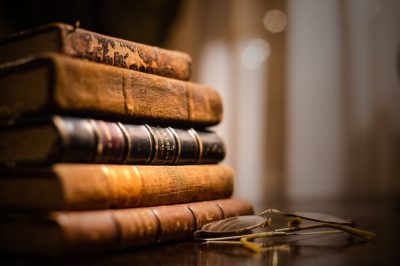
7 Books Worth Adding to a High School Student's Reading List
Writer: Carl Benedikt Frey
Topic: Economics, Technology, and History
ISBN: 978-0-691-23507-3
What happens when technological progress does not lead to continued economic growth?
That is the larger question behind Carl Benedikt Frey’s How Progress Ends. Published by Princeton University Press in 2025, the book looks across roughly 1,000 years of global history to examine why periods of technological and economic progress sometimes lead to stagnation or decline.
Frey analyzes different societies and periods rather than treating technological progress as an automatic path toward prosperity. This book considers how institutions, economic structures, political systems, and innovations interact over time.
For students, the value lies partly in the way the question is framed. Instead of asking whether technology is simply good or bad, the book asks why its effects differ across places and periods.
That makes it particularly interesting for students who are curious about economics, technology, history, public policy, or the changing role of AI.
What students can practice: connecting historical evidence to a broader argument and thinking about the causes and effects across different periods.
Writer: Benjamin Nathans
Topic: History
ISBN: 978-0-691-25558-3
History can sometimes be taught through major events and famous names. However, Benjamin Nathans takes a different approach.
To the Success of Our Hopeless Cause examines the Soviet dissident movement beginning in the 1960s, focusing on people who challenged the Soviet system through activities such as unauthorized public gatherings, petitions, and the circulation of banned texts. Princeton University Press published this book in 2024, and it won the 2025 Pulitzer Prize for General Nonfiction.
The book gives students opportunities to think about how historical change happens. Large political events are often remembered through leaders and major turning points, but social movements also depend on the choices made by individuals and smaller groups.
These ideas make the book useful for students interested in history, political science, human rights, or the relationship between individuals and institutions.
What students can practice: looking at a historical event from multiple perspectives and distinguishing between individual experiences and larger historical forces.
Writer: Elizabeth Chiarello
Topic: Sociology and Public Health
ISBN: 978-0-691-22477-0
What happens when technology designed to prevent drug misuse becomes part of everyday medical decision-making?
Elizabeth Chiarello’s Policing Patients examines the role of surveillance in the U.S. opioid crisis. Published by Princeton University Press in 2024, this book looks at doctors, pharmacists, patients, policymakers, and enforcement systems, exploring how efforts to control opioid prescribing can affect relationships between healthcare providers and the people they treat.
This subject is complicated because there is no single institution responsible for the problem. Healthcare, technology, law enforcement, public policy, and individual medical decisions all intersect in different ways.
For a high school student, this makes the book an interesting example of how social problems can look very different depending on which part of the system you examine.
It could be particularly relevant to students interested in public health, sociology, medicine, psychology, or public policy.
What students can practice: understanding how institutions influence individual decisions and examining a problem from more than one angle.
Writer: Irene I. Vega
Topic: Sociology and Immigration
ISBN: 978-0-691-26209-3
Rather than focusing primarily on immigrants in the U.S. immigration system, Irene I. Vega examines the people working inside it.
Bordering on Indifference draws from interviews with 90 immigration agents, including Border Patrol agents and ICE deportation officers, to examine how they understand their professional responsibilities and the moral questions surrounding their work. Princeton University Press published the book in 2025.
The book gives students an example of how researchers can study a complicated institution by listening to the people who work inside it.
It also demonstrates why social science research rarely fits neatly into a simple narrative. An institution can have rules and stated purposes, while the people working inside it may have their own experiences, motivations, and ways of understanding those rules.
For students interested in sociology, immigration, law, political science, or public policy, this can be a useful introduction to thinking about institutions at the human level.
What students can practice: evaluating how interviews and qualitative research can be used to understand complicated social questions.
Writer: Steve Ramirez
Topic: Neuroscience
ISBN: 978-0-691-26668-8
Can a memory be changed? This sounds like a science-fiction question, but neuroscientist Steve Ramirez explores it through actual research into how memory works.
Published by Princeton University Press in 2025, How to Change a Memory combines Ramirez’s personal experiences with his scientific work on memory manipulation. This book explores how memories can be reactivated, altered, or artificially created, while also considering ethical questions that come with influencing memory.
One reason this book may appeal to high school students is that it does not require them to read a technical neuroscience paper to encounter real scientific questions. The narrative connects laboratory research with the human experiences behind it.
It can also open the door to broader questions: If memories can change, how much do they shape our identities? If scientists eventually develop more powerful ways to manipulate memory, how should those technologies be used?
Those questions can lead naturally into further explanation for students interested in neuroscience, psychology, medicine, or research.
What students can practice: connecting scientific evidence with larger questions about ethics, identity, and human behavior.
Writer: Andrea Pinotti
Topic: Philosophy, Art, and Media
ISBN: 978-1-945861-02-4
Not every useful academic book needs to be about economics, science, or politics.
Andrea Pinotti’s At the Threshold of the Image explores why people have long imagined entering images, from classical myths and illusionistic art to cinema and virtual reality. Published by Zone Books in 2025, it examines how visual technologies challenge the boundary between what we see and what we experience.
For students interested in art, film, philosophy, media, design, or virtual reality, this book offers an opportunity to think about familiar technology from a very different perspective.
A student does not have to agree with every argument to benefit from that kind of reading. In fact, asking “Do I agree with this interpretation, and why?” is part of what makes academic reading useful.
What students can practice: interpreting ideas, comparing different forms of visual culture, and developing their own arguments.
Writer: Susanna Berger
Topic: Art History
ISBN: 978-0691201016
What can distorted architecture and unusual visual effects tell us about the way people pay attention?
Susanna Berger’s The Deformation looks at seventeenth-century Catholic Reformation art and architecture, particularly works that used visual and spatial distortions to challenge the viewer’s perception. Published by Princeton University Press in 2025, the book connects these artistic practices with questions about religion, optics, natural science, attention, and discernment.
At first glance, this might seem far removed from the concerns of a modern high school student. But the central idea is surprisingly relevant: how do we decide where to direct our attention, and how do we learn to see something carefully?
That question matters in an environment where students are surrounded by notifications, short-form content, AI-generated information, and constant distractions.
For students interested in art history, architecture, philosophy, or visual studies, the book offers a way to connect historical material with questions that still matter today.
What students can practice: close observation, interpretation, and building connections between historical evidence and broader ideas.
How Academic Reading Can Support Stronger Writing
Reading challenging books does not automatically turn a student into a better writer. But it gives students something valuable to work with.
When students read a sustained argument, they can see how an author introduces a question, builds context, presents evidence, considers complexity, and eventually reaches a conclusion.
Over time, students can begin to recognize those patterns in their own writing.
This is particularly useful as students move into more demanding high school courses. Research papers, analytical essays, seminar discussions, and extended projects require students to do more than recall information. They need to make a claim, support it with evidence, explain their reasoning, and respond to other perspectives.
A regular reading habit can also help students discover their academic interests before they have to choose a major to pursue or plan an application. A book about neuroscience might lead to a research project. A history book might inspire them to look deeper at a particular period. A question about technology might develop into an economics or computer science interest.
That is one reason we would not recommend treating reading as another item to check off an admissions list. The more useful goal is to help students find the questions they genuinely want to keep exploring.
Let Curiosity Lead the Reading List
The most valuable book on a student’s reading list may not be the one that looks the most impressive on paper. It may be the one that makes them stop halfway through a chapter and think, I’ve never looked at this that way before.
That moment can be the beginning of something larger: a new academic interest, a research question, a class discussion, or simply a stronger habit of asking why.
For students preparing for U.S. high school or college, those habits take time to develop. If you are thinking about how to build academic interests, reading habits, and longer-term school or college plans around individual strengths, you can schedule a free consultation with Ivy Talent Education. We’d be glad to discuss how your interests and strengths can shape a meaningful path forward.