
 中文
中文 Tiếng Việt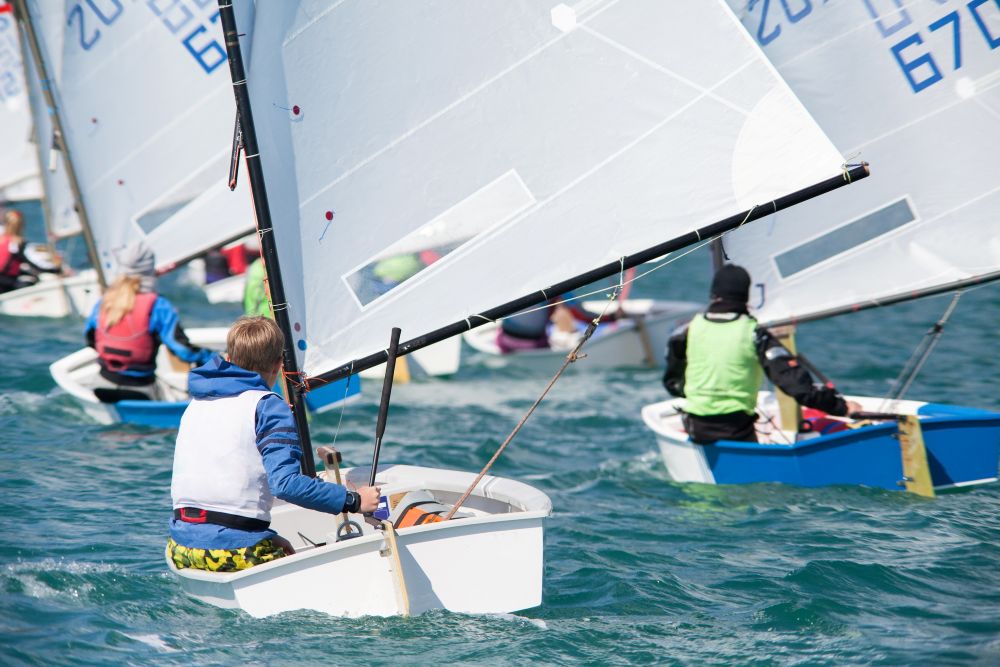

Most students and families start their college application process with a typical list: varsity sport, student government, community service, maybe a music ensemble, which is perfectly fine. However, when aiming for a competitive university, where thousands of applicants share similar profiles, the students who stand out are often those who bring something genuinely unexpected to their application.
Boarding schools are uniquely positioned to offer those unexpected opportunities. Many top programs offer activities you simply won’t find at most high schools. Students who discover a genuine passion through one of them often end up with a story that’s both authentic and rare. Here’s a look at some of the most distinctive offerings in boarding schools and why they matter.
Why Niche Activities Matter in College Admissions
Before diving into the specifics, it’s worth understanding what admissions officers are actually looking for when they read an activity list.
Selective colleges aren’t just looking for well-rounded students. They’re building well-rounded classes. This means they’re looking for individuals who have committed to a particular passion, developed genuine expertise, and can show sustained commitment over time. Quality over quantity. A student who has spent three years sailing competitively and can speak with real authority about the technical and strategic dimensions of the sport is far more interesting on paper than one who joined five clubs senior year to fill out a list.
Niche activities also carry an inherent advantage: they’re memorable. An admissions officer reading hundreds of applications in a week is more likely to remember the student who competed in fencing at the national level or whose origami work was exhibited in a gallery than one whose activities look identical to the previous twenty files.
The key is authenticity. A student who genuinely loves the activity and has truly invested in it will always be more compelling than one who joined it strategically. The goal is to find activities that genuinely fit the student, and delve deeper into them.
Fencing
Fencing is one of the most intellectually demanding competitive sports available at the high school level. It requires a combination of rigorous athleticism, pattern recognition, psychological composure, and technical precision distinct from almost any other activity. Many fencing coaches describe the sport as physical chess, and the comparison is apt.
The three weapons— foil, épée, and sabre— each have distinct rules and strategic frameworks, meaning serious fencers develop deep technical knowledge of a specific competitive discipline over years of practice. That demonstration of mastery in college applications resonates with admissions officers who seek evidence and depth.
Fencing is also an NCAA sport at many selective colleges and universities, including Columbia, Princeton, Yale, Harvard, Stanford, Duke, Notre Dame, and others. Students who reach a competitive level have opportunities at schools that can dedicate diligent training compared to crowded sports.
Schools with fencing programs include
- Phillips Academy Andover (Andover, MA)
- Phillips Exeter Academy (Exeter, NH)
- The Lawrenceville School (Lawrenceville, NJ)
- The Hun School of Princeton (Princeton, NJ)
- Georgetown Preparatory School (North Bethesda, MD)
- The Masters School (Dobbs Ferry, NY)
- Oregon Episcopal School (Portland, OR)
- Culver Academies (Culver, IN)
- Dana Hall School (Wellesley, MA)
- The Hockaday School (Dallas, TX)
- Baylor School (Chattanooga, TN)

Sailing
Sailing combines physical challenge, strategic thinking, and mental agility for the uncertainty of the waves. On the water, conditions change constantly. A sailor has to read the wind, anticipate shifts, manage equipment, and make real-time decisions under pressure, all while competing against opponents doing the same thing. These are skills that translate directly into the adaptability and composure that colleges are explicitly looking for.
Many top boarding schools offer sailing either as a varsity sport or a competitive club program. Some are located on or near the water specifically because sailing is part of their identity.
Schools with fencing programs include
- Tabor Academy (Marion, MA)
- St. George’s School (Newport, RI)
- Portsmouth Abbey School (Portsmouth, RI)
- Milton Academy (Milton, MA)
- The Hotchkiss School (Lakeville, CT)
- Culver Academies (Culver, IN)
- Brooks School (North Andover, MA)
- The Taft School (Watertown, CT)
- Concord Academy (Concord, MA)
- Brewster Academy (Wolfeboro, NH)
- Lake Forest Academy (Lake Forest, IL)
- Salisbury School (Salisbury, CT)
- Santa Catalina School (Monterey, CA)
- The Athenian School (Danville, CA)
- Stevenson School (Pebble Beach, CA)
Students who develop a strong competitive sailing record, particularly those who qualify for regional or national regattas, are often recruited by many colleges with varsity sailing programs. Sailing is an NCAA sport at schools including Yale, Harvard, Stanford, and Boston College, among others.
Rugby
Rugby’s presence in boarding schools has grown substantially over the past decade, and it’s now considered one of the more strategically interesting options for student-athletes who want to explore a different competitive path.
The sport rewards a combination of physical toughness, tactical awareness, and genuine team cohesion. Unlike football, where specialized positions limit overall involvement, rugby heavily demands that players be capable of running, passing, tackling, and executing set pieces. The result is a sport that develops athletic versatility and leadership in a way that is enticing to many coaches and admissions officers.
Culver Academies has one of the most established boarding school rugby programs in the country. The program includes varsity, junior varsity, and development teams. 0Most players enter with no prior rugby experience. The school actively recruits athletes from other sports who exhibit athleticism and coachability, making it genuinely accessible to students who want to try something new and persevere.
Schools with fencing programs include
- Culver Academies (Culver, IN)
- Georgetown Preparatory School (North Bethesda, MD)
- Kimball Union Academy (Meriden, NH)
One practical advantage of rugby is that, because it’s a growing sport in the U.S. with fewer dedicated high school programs than traditional sports, standout players can sometimes access recruitment opportunities at colleges where more established sports have extremely deep applicant pools.
Origami
Origami might seem like an unusual activity to highlight in a college application, but the version offered at elite boarding schools is far more sophisticated than what most people picture.
Phillips Exeter Academy has an active origami club where students explore the mathematics and structural principles behind paper folding alongside the artistic practice itself. Members investigate how origami intersects with engineering, computational design, and real-world applications. Unbeknownst to many, origami-based techniques have been widely used in various applications, from surgical instruments to space telescope design. Each year, the club exhibits student work on campus.
What makes origami particularly interesting from an admissions perspective is its intellectual dimension. A student who can connect their origami practice to mathematics, design thinking, or scientific applications immediately demonstrates cross-disciplinary curiosity, exactly the kind of profile that universities find compelling.
How to Think About Niche Activities Strategically
A few principles worth keeping in mind when thinking about whether a niche activity is the right fit:
1. Genuine interest comes first
A student who fences because they are passionate about the sport will always build a more compelling application narrative than one who joined fencing purely for credentials. Admissions officers are skilled at distinguishing authentic engagement from resume padding.
2. Depth matters more than breadth
Three years of serious commitment to sailing, with increasing competitive achievements and genuine leadership within the program, is far more valuable than a list of five activities with superficial involvement in each.
3. Consider the recruitment landscape
For student-athletes interested in playing at the college level, niche sports sometimes offer better access than mainstream ones. A nationally competitive fencer or sailor may have more recruitment conversations at selective colleges where the pool is smaller than a strong but not elite baseball or soccer player.
4. Look for the intersection
Meaningful narratives connect a student’s extracurricular passion to their broader intellectual interests. A student who loves origami and is passionate about mathematics, a sailor who’s also studying environmental science, a fencer who writes about the psychology of competition. These connections don’t need to be forced when they exist authentically, making applications genuinely stand out.
If you’re exploring boarding school options for your student and want help identifying programs that align with both their genuine interests and their long-term admissions goals, our team at Ivy Talent Education is here to help. Reach out to schedule a consultation and get guidance tailored to your student’s profile and aspirations.