 中文
中文 Tiếng Việt

Student Profile
Student Name:
Peter
Current School:
McCallie School
Admitted to:
Northwestern University
Summary
Peter is a student at McCallie School in Tennessee who earned admission to Northwestern University through Early Decision. Despite not coming from a well-known feeder school or having prestigious international awards, he stood out by focusing his application on his genuine passion for engineering. Through years of hands-on projects and supportive mentorship, Peter developed a distinctive profile that resonated with Northwestern’s emphasis on curiosity and innovation. His journey offers practical insights into how sustained purpose-driven work and strategic guidance can make a student shine in competitive STEM admissions.
Student Background
Originally from China, Peter faced early setbacks when he was applying to U.S. boarding schools. His initial application materials failed to highlight his strengths clearly, and by the time he came to us, he was just stuck on the waitlist, uncertain about where things were headed.
That uncertainty led him to Ivy Talent Education. When our consultant sat down with him, one thing stood out quickly: Peter had a quiet but genuine interest in engineering. The challenge wasn’t building a story around his curiosity; it was finding the right school that would give it room to grow.
That place turned out to be McCallie School, an all-boys boarding school in Chattanooga, Tennessee. Not the most nationally recognized name, but for Peter, it proved to be the ideal environment.
At McCallie, Peter found joy in spending time at the Innovation Lab. It was stocked with laser cutters, milling machines, and all the prototyping tools he needed for his projects. But more than these resources, he found teachers who trusted students and supported them in his growth. When he needed materials for a quadcopter project, his instructor simply ordered them for him.
That one moment probably tells you more about McCallie than any brochure could. At McCallie, Peter was treated less like a student following instructions and more like a young adult with real ownership over his work.
For a kid who had just navigated a grueling application process, that made all the difference.
How Ivy Talent Education Supported Peter’s Growth

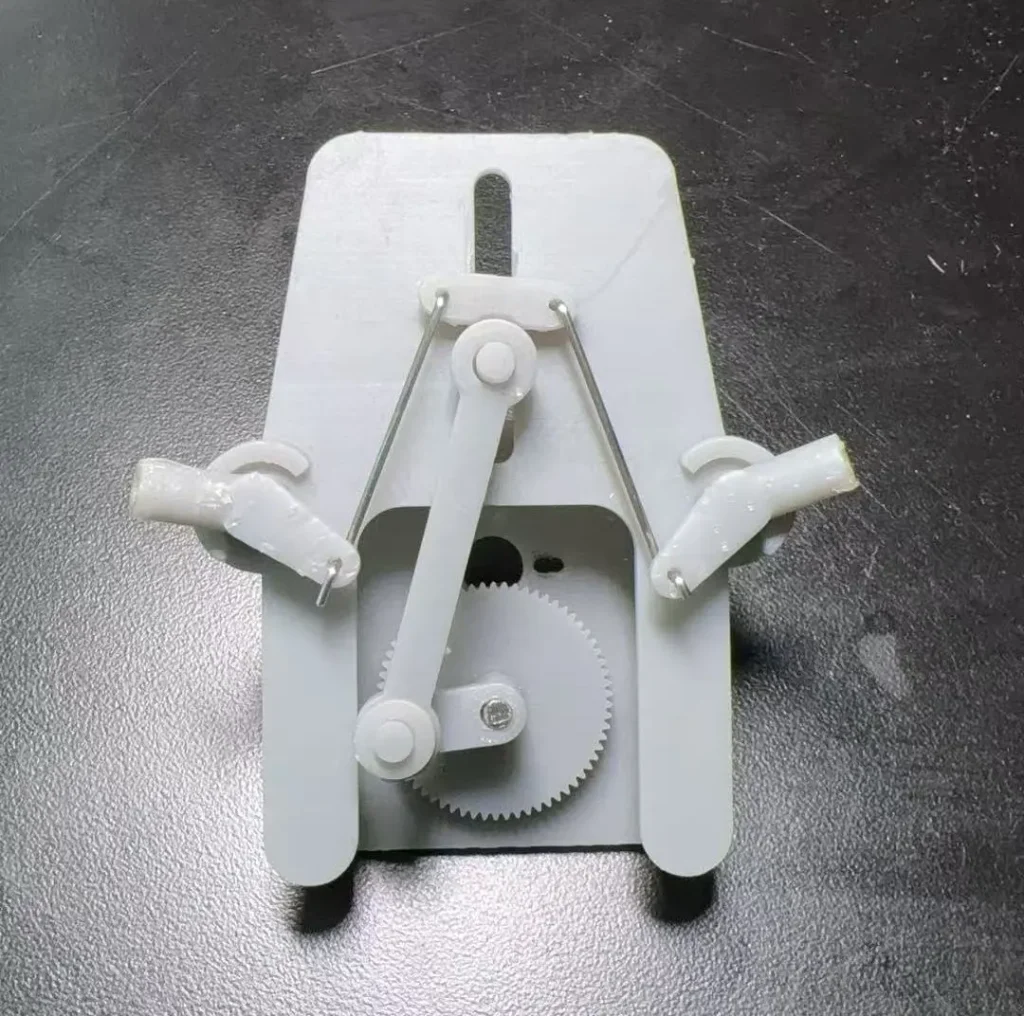
Peter’s handmade prototype
Academic Strategy: Course Rigor and Standardized Testing
Peter’s academic journey had its own share of challenges. Freshman year was a huge adjustment, the U.S. grading system was new to him, and building rapport with both his teachers and peers took time. His GPA improved by the end of the year, but the road remained demanding. In tenth grade, history class became a particular obstacle. The teaching style and assessment methods differed sharply from his STEM courses, with slow feedback and less defined grading. It was a different game, and his usual approach didn’t work.
By junior year, Peter had learned to be strategic. When his GPA got tough, he knew his test scores could make up the difference. That kind of self-awareness, knowing where to put his energy and when to lean on his strengths, served him well when standardized testing arrived.
The TOEFL took a few attempts. He had originally set his sights on a 115, but after multiple tries, he made a clear-eyed decision: 110 was enough, and continuing to chase that last five points wasn’t the best use of his time. He shifted his focus to the SAT.
Approaching the SAT with a different mindset, Peter decided to aim for a single decisive score. He committed intensely to test prep, pushing himself to be the top performer on both homework and vocabulary. That approach paid off. He earned a 1560 on his first attempt in October.
From the beginning, our role was not to overlook Peter’s grades or hand him a list of activities to check off. He was naturally self-driven, and his interest in engineering was already clear, it just needed direction. What he needed, then, was a coherent path, not more things to add to a résumé.
We focused on three areas.
First, we helped him maintain a clear academic focus. Instead of dabbling across different subjects, Peter committed early to mechanical engineering. We encouraged him to deepen that focus through summer programs, starting with a project-based engineering course at Johns Hopkins. That experience showed him what applied engineering could look like beyond classroom labs. He left that program knowing, more concretely than before, that this was the direction he wanted to go.
Second, we emphasized continuity. Peter’s work on biomimetic drones, starting with basic quadcopters and progressing to ornithopters modeled on bird flight, became his signature project. We wanted him to see the value in capturing his process, not just the finished product. He started a YouTube channel to record his progress. Over time, those videos evolved from anonymous, faceless clips to confident presentations showing design challenges and solutions. That record ended up saying more about his growth than any list of accomplishments could.
Third, we helped him find collaborators. His early attempts to build a team at McCallie proved difficult given that his project direction was too niche. So we shifted strategy and helped him connect with students outside McCallie who shared his interests. In that new team, Peter naturally stepped into a coordination and leadership role, which pushed him into territories he hadn’t explored before: disseminating responsibilities, making huge decisions, keeping people aligned.
Throughout all of it, we acted as strategic partners, helping Peter connect his independent work to a larger narrative. His story was not about trophies or rankings. It was about growth, sustained curiosity, and the willingness to show his work—even when it wasn’t finished, even when it wasn’t yet perfect.
Building an Applicant Profile: Beyond the Lab
Peter’s engineering projects formed the backbone of his application, but there was more to his profile than his work in the lab.
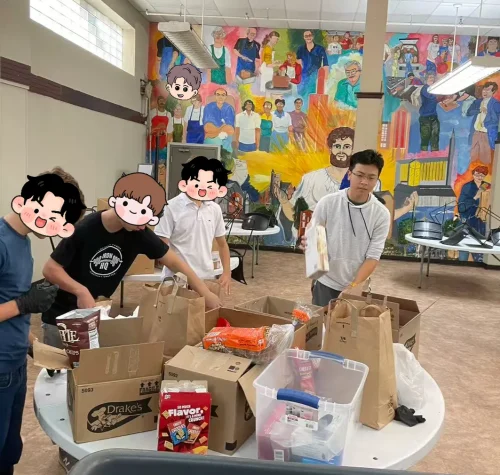
One of the meaningful roles he played at McCallie was Resident Assistant (RA). In an all-boys school with a strong sports culture, managing a floor of underclassmen was demanding work. It pushed him in ways that building drones never did, navigating conflicts, earning the trust of younger students, figuring out when to be firm and when to just listen. Fortunately, he handled it well enough that his dorm faculty took notice, and he was eventually invited to join the student leadership council, a group of seniors who meet directly with the head of school to address campus issues.
This combination of hands-on engineering, cross-disciplinary curiosity, and community responsibility created a multidimensional profile. Peter was not just a builder; he was someone who could lead and contribute to his community. Engineering told one part of his story. The rest showed who he was outside of it, a leader, a collaborator, a meaningful contributor.
Why Northwestern: Fit Over Formula
When it came time to choose an Early Decision school, Northwestern was just the right fit. Peter’s interest in aerospace engineering aligned naturally with the way Northwestern approaches the field. What drew him there wasn’t prestige, but the university’s genuine emphasis on cross-disciplinary thinking, which happened to be exactly how Peter already worked. His application highlighted a key theme: the belief that the most interesting innovations happen at the intersections of fields.
Peter had not confined himself to a single engineering discipline. He studied mechanical systems, used computer modeling, explored physics principles, and even looked to biology for inspiration in his ornithopter projects. On top of that, he invested heavily in math and foundational theory, because he understood early that strong engineering rests on solid foundational knowledge.
This cross-disciplinary mindset matched Northwestern’s engineering philosophy. The video documentation of his project iterations he submitted in his application showed a student who thought like both an engineer and a researcher.
The Application Process: Refining the Narrative
Writing the personal essay didn’t come easily at first. Peter’s early drafts read more like lab reports than personal stories. This is where Ivy Talent Education comes to help. Through multiple rounds of feedback, we helped him shift from simply describing what he built to explaining why it mattered to him and how it would matter to the community at large. His final essay focused on failure and iteration: how he learned to accept criticism, respond to feedback from his YouTube audience, and develop a growth mindset through engineering challenges. It was a much more honest piece of writing, and it showed his growth as a person.
Course selection also required careful thought. A peer suggested Peter to take lighter humanities courses in junior year to increase his GPA. We pushed back. For competitive engineering programs, we know that admissions committees prefer students who go outside their comfort zone and challenge themselves across disciplines. Peter followed that advice. The workload was heavy, but it strengthened his academic profile and said something about his courage and persistence that an easier schedule simply wouldn’t have.
The most critical moment came when Peter hesitated about applying as an aerospace engineering major. As a Chinese passport holder, he was worried that the field carries sensitivities around national security and international students. We acknowledged the concern, but we also reminded him that his record spoke clearly: years of self-directed work on flight systems, documented publicly, driven entirely by curiosity. That’s not a red flag, that’s a serious applicant. Our talk led him to move forward without compromise, a choice that ultimately led to his acceptance.
Looking Back: What Made the Difference
Peter’s path to Northwestern did not follow the conventional STEM applicant playbook. For one, he had no international awards. He did not participate in a long list of competitions. What he had was four years of focused, documented work on something he genuinely cared about, and the willingness to show all of it, including the parts that didn’t go as planned.
His advice to students who follow is simple: find the environment where you can build what you actually care about. Document your process. Do not be afraid to show your failures. And when choosing where to apply, look for programs that care about your values and how you think, not just what awards you’ve won.
For families navigating high school or college admissions, Peter’s story is a good reminder that a successful application does not require a perfect record. It requires a clear direction, consistent effort, and a story that connects what you have done to what you want to do next.
If you are looking for that kind of guidance, whether your student is drawn to engineering like Peter, the humanities, or something still taking shape, we invite you to reach out. Contact Ivy Talent Education today to learn how we can support your family through every stage of the admissions journey.