
 中文
 Tiếng Việt


Student Profile
Student Name:
Alice
Current School:
Blair Academy
Admitted to:
Massachusetts Institute of Technology (MIT)
Overview
Alice came to the US for middle school at Rumsey Hall School and moved on to Blair Academy for high school. She eventually earned an Early Action acceptance to MIT in the 2025-2026 application cycle. She will also join MIT’s women’s rowing team as its only new international member this year. Ivy Talent worked with her family across three application stages over nine years. Over those nine years, we watched Alice grow from a quiet middle school student who hesitated to speak up into a confident problem-solver who uses engineering to address real challenges.
Student Background
Alice attended public school in China before moving to the US for middle school. Her English writing needed improvement at first, so we encouraged her to read widely and build the reading, discussion, and critical-thinking skills emphasized in American classrooms.
She then took writing courses and entered the Scholastic Writing Competitions, and writing soon turned out to be her clearest strength. While her math and science grades stayed solid, she stood out most in the humanities. For a long time, she had no particular plan for what she wanted to study.
Sports have always been part of Alice’s life. She played volleyball, basketball, and tennis at Rumsey Hall, and after moving on to Blair, she took up rowing. She also spent a lot of time doing community service. She made holiday cards for children at a local hospital, and during the pandemic, she recorded short music and English lessons for children in underdeveloped mountainous areas.

Challenge
Of the challenges Alice faced, the most significant one doesn’t show up on a transcript. During her first few years in the US, she hesitated to ask teachers questions or speak up for herself.
As she began thinking seriously about college, she could have easily settled into a humanities track. After all, she had always shown strong writing skills. But being an international student, she had to think about career opportunities and the job market as well. She also didn’t want to limit herself to what she had always been good at. At the same time, she was doing well in STEM classes and had begun developing a genuine interest in the problems they explored. The challenge was figuring out whether that interest could grow into something she wanted to pursue beyond the classroom.
How We Helped
Having known Alice for years, we knew our approach should not be about drafting a finished plan for her. We adjusted our plan as she changed, and her interests had changed quite a bit by the time she attended Blair.
The first real turning point came when Alice had a wrist injury. As physical therapy and sports rehabilitation became a regular part of her life, she began asking why the injury happened, how it healed, and how to prevent it from happening again. These questions led her into anatomy, biomechanics, and engineering. She read on her own and eventually started an independent project on injury mechanisms and prevention. It was the first time she pursued a STEM question outside of a class assignment, so we encouraged her to follow that thread. A challenge in her own life had pulled her into the field.
From there, we helped Alice find opportunities to turn curiosity into action. One opportunity emerged from a problem in her dorm’s laundry room: students had no easy way to tell which machines were in use or when they would become available. Alice took it upon herself to design a system that combined a mechanical component with an app, which allowed students to check remaining cycle times and see open machines on their phones. It worked, and the laundry room ran more smoothly because of it.
We also suggested that she join a STEM education nonprofit in New York. She hesitated at first, wondering whether her time would be better spent on lab research. But learning how different STEM teachers explain difficult ideas gave her new methods, which she brought back to her work as a STEM tutor at school. She applied what she learned to her tutoring at Blair, finding new ways to explain concepts that her classmates had previously struggled to understand. One project made the laundry room better, and the other helped her classmates learn more effectively. While these were different outcomes, they showed the same instinct: Alice wanted to use what she knew to solve problems around her. Together, these experiences reflected her initiative, curiosity, and willingness to turn ideas into practical solutions.
Throughout this journey, we made sure Alice never felt that exploring STEM meant giving up the humanities. She kept writing and earned a Scholastic Silver Key for writing and a Gold Key for photography. She was also inducted into the Cum Laude Society.
When it came time to write her personal essay, we encouraged Alice to explore a different side of herself rather than focus solely on engineering. She ultimately chose to write about cultural sensitivity and emotional intelligence through a story from her own family. This way, admissions officers could see who she was, not just what she had built.
Her leadership grew in the same direction. At Blair, she became a dorm leader. She joined the international student organization and a school mental health committee, and started a student group focused on mental wellness. Over time, she moved from needing encouragement to speak up to noticing what her community needed and doing something about it.
When application season arrived, Ivy Talent helped Alice stay organized by tracking deadlines, reviewing supplemental requirements, and checking her application materials before submission. This allowed Alice to focus on her essays and her own voice, and the whole process felt calm and manageable for her.
From Early Action to the Rowing Team
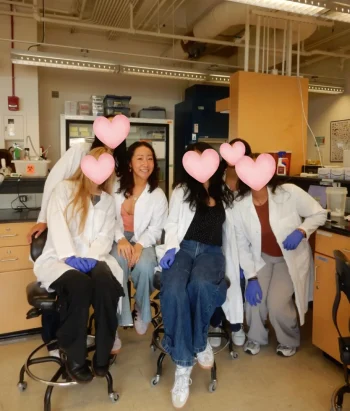
Alice was admitted to MIT through Early Action. She will also be joining its women’s rowing team as the only new international member this year. These two results grew out of the same habits: showing up consistently and staying with demanding work over a long stretch of time.
Nine Years Later, a Student Who Trusts Her Own Direction
Looking back, what stands out most is how Alice developed the confidence to make her own decisions while receiving guidance and support along the way. The girl who once hesitated to approach a teacher now builds systems, runs student groups, and decides for herself what to study. Her parents, who had also studied abroad, always encouraged her to speak with us directly and make her own choices. And we did what we could to honor that at every stage. We also tried to be there for the smaller moments, like when Alice arrived at school early and had no place to stay. We arranged housing through our contacts in the US so her family could rest easy from far away.
If your child is moving through the US school system and you want a team that adapts as your child grows, we would be glad to talk. Reach out and schedule a free consultation with Ivy Talent Education to see what a plan built around your child’s own path could look like.