
 中文
中文 Tiếng Việt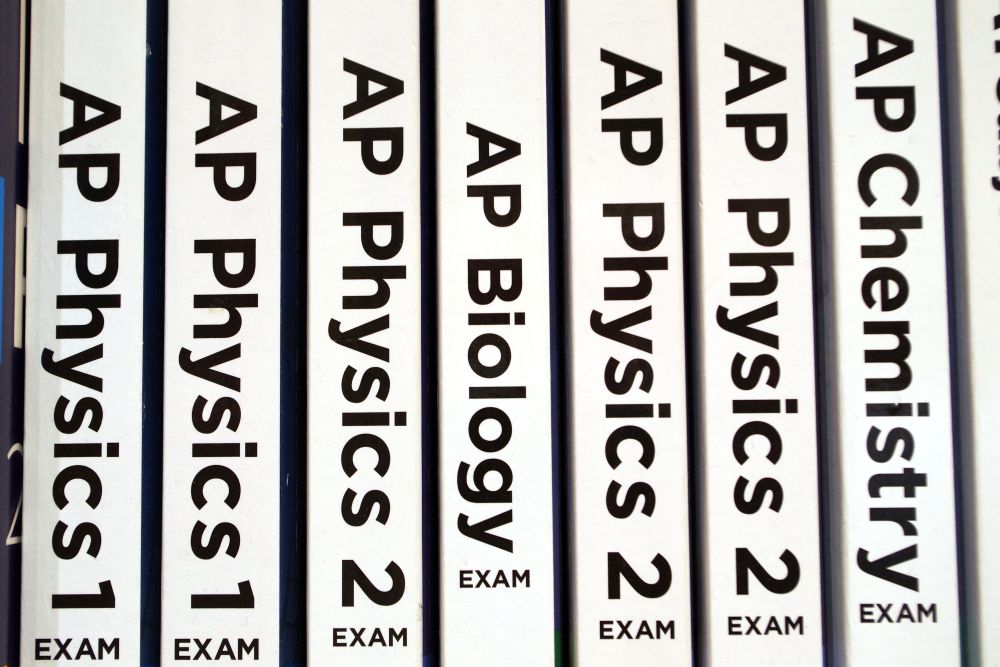

In today’s U.S. college admissions landscape, AP courses have become significant in academic planning for many high school students. Most families begin discussing AP strategy as early as freshman year, with students taking multiple AP classes, self studying for exams, or mapping out an efficient, strategic course schedule.
However, the biggest misconception about AP courses is that more is always better.
In reality, colleges do not simply count the number of APs on a student’s transcript. They weigh out whether a student’s coursework aligns with their academic strengths, grade level, long term interests, and preselected college major. Without a carefully crafted plan, students can easily fall into the trap of overloading on APs or choosing classes based on popular demand.
This guide explains what AP courses are, how the AP system works, which subjects are most popular, how difficult AP exams really are, and the recommended approach to AP planning at different stages of high school.
What Are AP Courses?
Advanced Placement, commonly known as AP, is a college-level academic program created by the College Board. AP courses provide high school students with exposure to introductory college-level material while still in high school.
Compared to standard high school classes, AP courses generally emphasize academic rigor, critical reading, analytical thinking, and academic writing, among other aspects.
AP courses closely resemble college coursework. Hence, many U.S. universities focus on a student’s AP performance during the admissions process. Thus, for families new to AP, understanding the difference between an AP course and an AP exam may be confusing.
The AP system has two separate parts: AP Courses and AP Exams.
AP courses are typically offered in high schools, while AP exams are standardized tests administered by the College Board.
More importantly, it is not a prerequisite to take the official AP course to participate in the AP exam. Even if a school does not offer a particular AP subject, students may still self study and register for the exam independently.
AP Courses
AP courses are usually year long classes taught at the high school level. Students complete coursework throughout the school year, including homework assignments, projects, labs, essays, presentations, tests, and class discussions.
Compared to regular high school classes, AP courses are significantly more demanding and are designed to simulate introductory college classes.
For example:
- AP Calculus parallels first year college calculus
- AP Psychology resembles an introductory psychology course
- AP Economics introduces foundational economic theory and analysis
AP is not simply a testing system. It is a college preparatory academic curriculum.
AP Exams
AP exams are typically administered each May. Students receive scores on a scale from 1 to 5:
- 5: Extremely well qualified
- 4: Very well qualified
- 3: Qualified
- 2: Possibly qualified
- 1: No recommendation
Many U.S. colleges grant college credit, advanced placement, or course exemptions for students with AP scores of 3 or higher; however, policies vary by institution.
As a result, AP scores can play two roles:
- Supporting college applications
- Potentially helping students earn college credit before enrolling
The College Board currently offers 42 AP subjects across disciplines, including math, science, English, history, computer science, languages, and the arts.
However, the significance of AP classes varies for each student. The best AP schedule is not necessarily the easiest or the most impressive on paper. The most effective AP plan strengthens and supports a student’s long term academic goals.
AP Courses for STEM Students
Students interested in the following fields often benefit from stronger STEM focused AP coursework:
AP Calculus AB and BC
Calculus is one of the most important AP subjects for STEM oriented students.
- AP Calculus AB generally covers the first semester of college calculus
- AP Calculus BC is faster-paced and more advanced
For students applying to engineering, computer science, physics, math, or economics programs, AP Calculus BC often provides a stronger academic record.
Still, BC is not automatically the better choice for every student. If a student’s math foundation is not yet stable, taking BC too early may negatively affect both GPA and overall academic balance. The decision between AB and BC should depend on readiness, not prestige.
AP Statistics
AP Statistics focuses on: Data analysis, Probability, Statistical inference, and Research methods. Unlike traditional math courses, AP Statistics prioritizes practical interpretation and data driven thinking.
It is particularly relevant for students interested in: Business Analytics, Economics, Psychology, Marketing, Public Policy, and Social Sciences
AP Computer Science A (CSA)
This course focuses heavily on Java programming, coding logic, and object oriented programming. It is more rigorous and is valuable for students planning to major in computer science or engineering.
AP Computer Science Principles (CSP)
This course is a broader introduction to computing concepts, including algorithms, data, and the internet. It is more compatible for beginners exploring computer science for the first time. For students seriously pursuing computer science, AP Computer Science A usually carries greater academic weight.
AP Physics 1, 2, and C
- AP Physics 1 and 2 are algebra-based courses
- AP Physics C is calculus-based and significantly more advanced
- AP Physics C branches out to Mechanics and Electricity and Magnetism
For students pursuing engineering or physics-related fields, AP Physics C signals a stronger academic foundation, particularly when paired with calculus coursework.
AP Chemistry and AP Biology
Both AP Chemistry and AP Biology are known for heavy workloads and complex concepts.
AP Chemistry is best suited for students interested in:
- Chemistry
- Engineering
- Materials Science
- Pre-med pathways
AP Biology is most preferred by students interested in:
- Biology
- Pre-med
- Life Sciences
- Public Health
- Psychology
These courses require strong long term study habits and cannot be mastered through short term memorization alone.
AP Courses for Business and Economics
Students planning to pursue business, economics, finance, marketing, or management often benefit from the following AP subjects.
AP Microeconomics and AP Macroeconomics
AP Microeconomics focuses on:
- Supply and demand
- Consumer behavior
- Market structures
- Business decision making
AP Macroeconomics covers broader economic systems, including:
- Inflation
- Unemployment
- Monetary policy
- Fiscal policy
- Economic growth
These courses allow students to highlight their interest in business and economic thinking, but they require strong analytical reasoning and graph interpretation skills.
AP Psychology
AP Psychology is one of the most popular AP subjects among high school students.
Topics include: Cognition, Development, Personality, Social psychology, Psychological disorders, and Learning theory.
The course is suitable for beginners, but it still requires extensive reading, terminology memorization, and conceptual understanding.
AP Courses for Humanities and Social Sciences
For students interested in history, political science, international relations, communications, law, sociology, or education, humanities focused AP courses can showcase strong reading and writing ability.
AP U.S. History (APUSH)
APUSH is one of the most rigorous APs in the humanities. Students are expected to:
- Analyze historical documents
- Construct evidence based arguments
- Write timed analytical essays
- Read large amounts of material quickly
For many international or multilingual students, the pacing for English reading and writing may be more challenging than the history itself.
AP World History and AP European History
These courses emphasize: Historical analysis, Cause and effect reasoning, Comparative thinking, and Long term historical trends.
They are especially useful for students pursuing humanities, international relations, law, or social sciences.
AP English Language and AP English Literature
AP English Language and Composition focuses on:
- Nonfiction analysis
- Rhetorical analysis
- Argumentative writing
AP English Literature and Composition focuses on:
- Literary interpretation
- Poetry analysis
- Fiction analysis
- Literary criticism
These courses are rigorous for students whose academic English skills are still developing. Strong AP English performance strongly demonstrates advanced academic communication ability to colleges.
AP Courses in the Arts and Interdisciplinary Fields
Some students choose AP subjects that align with creative or interdisciplinary interests. These courses may not fit every student, but they are strong supports when aligned with long-term academic goals.
For example:
- Architecture or design students may benefit from AP Art and Design
- Environmental policy or urban studies students may consider AP Environmental Science or AP Human Geography
How Difficult Are AP Exams?
Many students assume AP courses are difficult simply because the material is harder. In reality, most of the pressure comes from expectations placed on them. AP courses are designed to reflect college level academic expectations.
Strong English Skills Matter
For many students, especially international or multilingual learners, English proficiency is one of the biggest factors affecting AP success. Most AP classes emphasize extensive textbook reading, academic analysis, timed writing, and advanced vocabulary.
In subjects like AP history, students often struggle less with the content itself and more with reading pace, essay organization, and time management.
FRQs Are Often the Hardest Part
Many AP exams include Free Response Questions (FRQs), which are one of the most important scoring components.
FRQs evaluate:
- Logical reasoning
- Structure and organization
- Evidence usage
- Academic writing
- Conceptual explanation
Simply put, AP exams go beyond what students know, but how they think and communicate. Examples include:
- Explaining experimental data in AP Biology or Chemistry
- Interpreting graphs and models in AP Economics
- Constructing historical arguments in APUSH
Because of this, AP preparation requires more than memorization. Students need constant practice in analysis, writing, and problem solving.
Difficulty Varies by Subject
There is no universal ranking of AP difficulty because it depends heavily on a student’s strengths, academic background, and learning style.
Generally, the following APs are considered especially demanding:
- AP Physics C
- AP Chemistry
- AP Biology
- AP Calculus BC
- AP U.S. History
- AP English Literature
Meanwhile, courses like AP Psychology, AP Human Geography, and AP Environmental Science are considered more accessible entry points for novice students to AP coursework.
Still, introductory does not necessarily mean easy. Many AP classes cover large amounts of material and require highly organized preparation.
Why Do AP Courses Matter for College Admissions?
One of the biggest reasons AP courses matter in admissions is because of course rigor. Selective colleges do not evaluate GPA alone. They also look into how resourceful a student was in making use of the opportunities their school offered. AP courses are one of the clearest standardized indicators of academic rigor.
AP Courses Demonstrate Academic Readiness
Strong AP performance often signals that a student can:
- Handle demanding coursework
- Learn independently
- Sustain long term academic effort
This becomes even more meaningful when the AP subjects align with the student’s intended major. For example:
- Engineering applicants benefit from AP Calculus BC and AP Physics C
- Economics students strengthen their profile with AP Economics and AP Statistics
- Psychology applicants may benefit from AP Psychology, AP Statistics, and AP Biology
AP Coursework Influences Academic Evaluation
Most U.S. high schools use weighted GPA systems in which AP courses receive additional weight. As a result, admissions officers often consider:
- Number of AP classes
- Difficulty level
- Grade consistency
- Overall course progression
Two students with identical GPAs may still be academically distinct depending on the rigor of their coursework.
However, taking too many APs can backfire if it causes:
- GPA decline
- Burnout
- Reduced extracurricular involvement
- Lack of academic focus
AP Helps Students Build a Clear Academic Narrative
As the college admissions landscape becomes increasingly competitive, a high GPA alone is often no longer enough to stand out.
Thoughtfully chosen AP coursework can help demonstrate:
- Intellectual curiosity
- Academic direction
- Proactive self improvement
- Consistent long term interests
The strongest applications usually connect AP coursework with:
- Intended major
- Research interests
- Extracurricular activities
- Competitions and projects
- Personal narrative
AP Still Matters in the Era of Returning Standardized Tests
Despite some universities reinstating SAT and ACT requirements in recent years, coursework remains one of the most important parts of the admissions process.
Unlike a one time standardized test, AP courses reflect sustained academic performance over time and provide a clearer picture of how students handle rigorous learning environments.
AP Planning Strategies by Grade Level
Effective AP planning is not simply about asking: How many APs should I take? Students need to map out a strategic course plan based on grade level, academic strength, and long-term goals.
Freshman and Sophomore Year: Build Foundations
During 9th and 10th grade, students should focus on building strong study habits, exploring academic interests, and maintaining a stable GPA. At this stage, 1 to 2 introductory AP courses may be appropriate.
Potential options include:
- AP Human Geography
- AP World History
- AP Statistics
- AP Computer Science Principles
Junior Year: Increase Rigor Strategically
11th grade is often the most important year for AP coursework as it directly shapes the academic profile colleges review. Students should begin selecting AP classes that strongly support their intended major.
STEM Students
- AP Calculus BC
- AP Physics C
- AP Chemistry
- AP Computer Science A
Business and Economics Students
- AP Microeconomics
- AP Macroeconomics
- AP Statistics
- AP Calculus
Humanities and Social Science Students
- AP U.S. History
- AP English Language
- AP U.S. Government and Politics
- AP Psychology
The goal is not maximum quantity, but meaningful academic rigor aligned with future goals.
Senior Year: Maintain Balance
Senior year often includes college applications. Students need to prepare for essays, interviews, scholarship applications, and standardized tests. Students should avoid overloading themselves with excessive AP coursework at the expense of application quality or GPA stability.
Students prioritize maintaining academic momentum and continuing a coherent academic path in senior year rather than dramatically increasing the number of AP courses.
The real value of AP courses lies beyond adding more lines to a college application. Strong AP planning demonstrates a student’s willingness and ability to take on meaningful academic challenges.
The most effective AP strategy is careful, balanced, and personalized. Instead of chasing the highest number of APs or following trends, students should focus on building an academic path that reflects their strengths, interests, and long term goals.
A well designed AP plan benefits students by gradually increasing academic rigor, developing stronger subject expertise, and presenting a more convincing academic profile during the college admissions process.
If your family needs personalized guidance on AP course planning, academic positioning, or long term college admissions strategy, you can connect with our team for individualized support and planning.